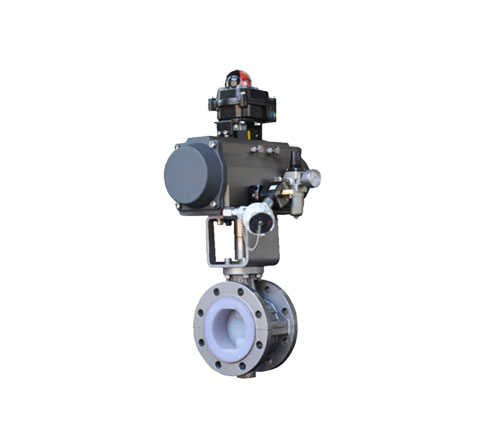
Butterfly valves are a popular choice for regulating or isolating flow in a wide range of industries — from water treatment to oil and gas. Within the butterfly valve family, the design can vary based on how the disc is mounted and operates. Two such designs are the single eccentric and double eccentric butterfly valves.
At first glance, the differences might seem subtle, but they can have a major impact on performance, lifespan, and application suitability. So, let’s break it down and understand: What exactly is the difference between single eccentric and double eccentric butterfly valve?
To understand the difference, we first need to understand what “eccentric” means in valve design.
An eccentric butterfly valve is a valve where the disc is mounted off-center (i.e., eccentrically) to reduce friction between the disc and the seat during opening and closing.
Why is that important?
In concentric butterfly valves (where the disc and shaft are centered), the disc scrapes against the seat as it turns — causing friction, wear, and higher torque requirements.
Eccentric designs aim to reduce that contact. And they come in three main forms:
Single eccentric
Double eccentric
In this article, we’ll focus on the first two.
A single eccentric butterfly valve features one offset — the shaft is positioned behind the centerline of the sealing surface of the disc.
1st offset: The shaft is offset slightly behind the center of the disc.
This means the disc no longer rotates exactly at the center of the valve, allowing the disc to lift away from the seat earlier during opening.
Reduces seat friction compared to concentric valves
Disc still rubs against the seat during part of its movement
Typically uses a soft seat (like EPDM, NBR, or PTFE)
Suitable for low- to medium-pressure applications
Water distribution
HVAC systems
Non-critical fluid control
General-purpose industrial flow control
A double eccentric butterfly valve adds another layer of offset:
First offset: Same as single eccentric — shaft is behind the disc’s sealing surface centerline.
Second offset: Shaft is also horizontally offset from the pipe’s centerline (i.e., the shaft is not in line with the valve bore).
This dual-offset design introduces a cam-like motion, where the disc quickly moves away from the seat during opening, minimizing contact.
Less friction and wear compared to single eccentric
Allows for higher pressure and temperature ratings
Can be paired with soft or metal seats depending on application
Offers longer lifespan and improved sealing
Oil and gas pipelines
Water and wastewater treatment
Power generation
Industrial processing
Let’s break it down side-by-side:
| Feature | Single Eccentric | Double Eccentric |
| Number of Offsets | 1 | 2 |
| Disc Movement | Partially lifts off seat during opening | Quickly lifts off seat with minimal rubbing |
| Friction | Medium – reduced compared to concentric | Low – disc disengages from seat faster |
| Seal Type | Usually soft seat | Soft or metal seat possible |
| Pressure & Temp Resistance | Low to moderate | Moderate to high |
| Durability | Better than concentric, but limited in harsh use | More durable and long-lasting |
| Applications | Non-critical services, water, HVAC | More demanding industries like oil, gas, power |
| Cost | Lower | Slightly higher (due to improved performance) |
| Common Sizes | Small to medium diameters | Medium to large diameters |
Think of it like this:
A single eccentric valve is like opening a door with a hinge slightly off-center — easier than a door that scrapes the floor (concentric), but still not smooth.
A double eccentric valve is like a smart hinge that lifts the door slightly off the floor when you open it — almost no rubbing, smoother operation, and longer-lasting parts.
The construction materials can vary based on application, but generally:
Body: Cast iron, ductile iron
Disc: Stainless steel, aluminum bronze
Seat: Soft (rubber, PTFE)
Body: Ductile iron, carbon steel, stainless steel
Disc: Stainless steel, bronze, nickel-coated options
Seat: Soft or metal (depending on pressure and temperature requirements)
Single eccentric valves are simpler, easier to install, and cost-effective for light-duty jobs.
Double eccentric valves require a bit more precision in alignment, but reward you with better performance and longer service intervals.
Maintenance tip: Regular inspection of seat wear is crucial for both types, but double eccentric valves will usually show less degradation over time.
It all comes down to your specific needs.
You're dealing with low-pressure or non-corrosive fluids
Your system doesn’t require ultra-tight shut-off
Cost-effectiveness is a top priority
You need better sealing and durability
You’re operating in moderate-pressure or temperature environments
You’re handling critical process fluids or want longer valve life