Butterfly valves are popular in industries ranging from water treatment to oil and gas — and for good reason. They’re compact, lightweight, and cost-effective for controlling flow. But here’s the twist: not all butterfly valves are created equal.
You’ve probably come across terms like concentric, single eccentric, double eccentric, and triple eccentric. Confusing? You’re not alone.
In this article, let’s focus on one of the most fundamental comparisons:
What is the difference between concentric and eccentric butterfly valves?
By the end, you’ll understand their design, function, advantages, and when to use one over the other.
A butterfly valve is a quarter-turn valve used to regulate the flow of a fluid. It consists of a disc mounted on a rotating shaft. When the disc is parallel to the flow, the valve is open; when it’s perpendicular, the valve is closed.
The difference between concentric and eccentric valve lies in the position of the disc and shaft — and how they interact with the valve seat during opening and closing.
| Feature | Concentric Butterfly Valve | Eccentric Butterfly Valve |
| Shaft & Disc Alignment | Shaft is centered in disc and body | Shaft is offset from disc or body center |
| Design Types | Single type (zero offset) | Single, double, and triple offset designs |
| Seat Type | Soft seat (rubber, elastomer) | Metal or hybrid seat |
| Sealing Mechanism | Interference fit (compression) | Cam-like motion or torque seated |
| Friction During Operation | High | Reduced to none (depends on offset) |
| Applications | Low-pressure, clean fluids | High-pressure, harsh or critical conditions |
Also known as a zero-offset butterfly valve, the concentric design is the simplest and most common type.
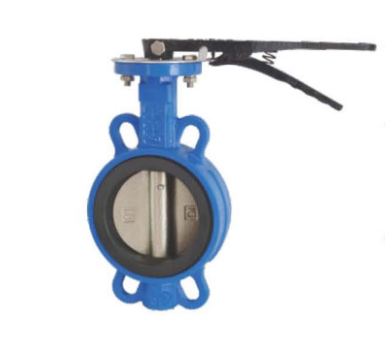
concentric butterfly valve for sale in Utmost
The disc is centered inside the valve bore.
The shaft runs directly through the center of the disc.
The seat fully surrounds the flow path and is typically made of soft material like EPDM, NBR, or PTFE.
Simple and economical
Lightweight and compact
Excellent for bubble-tight shutoff (low-leakage)
Easy to install and operate
High friction between disc and seat during operation
Seat wear over time due to constant rubbing
Not suitable for high temperatures or abrasive fluids
Potable water systems
HVAC (heating, ventilation, and air conditioning)
Food and beverage
Irrigation systems
An eccentric butterfly valve refers to any valve where the shaft is offset from the disc center and/or valve body center. These offsets reduce seat contact, minimize friction, and improve sealing.
There are three eccentric butterfly valve types:
Shaft is offset from the disc centerline.
Reduces rubbing during the initial opening.
Shaft is offset from both the disc center and valve body centerline.
The disc moves away from the seat immediately after opening.
Great for medium-pressure systems.
Includes the above two offsets plus a conical sealing surface.
Achieves zero friction and metal-to-metal sealing.
Suitable for extreme temperatures, high pressure, and hazardous fluids.
The disc scrapes against the seat as it opens and closes.
Sealing is achieved through compression of a soft seat.
Best for clean and low-demand systems.
The disc moves away from the seat as it opens (especially in double/triple offset).
Sealing is achieved through cam-action or torque, not rubbing.
Handles tough conditions, high pressure, and temperatures.
| Type | Seal Type | Leakage Class | Suitable Media |
| Concentric | Soft (rubber/PTFE) | Class IV–V | Clean water, air, light chemicals |
| Single/Double Eccentric | Soft/Metal Hybrid | Class V | Water, slurry, light industrial fluids |
| Triple Eccentric | Metal-to-Metal | Class VI (zero) | Steam, gas, oil, corrosive fluids |
| Part | Concentric Valve | Eccentric Valve |
| Body | Cast iron, PVC, stainless steel | Stainless steel, carbon steel, duplex |
| Disc | Stainless steel, bronze | Stainless steel, nickel-bronze, Inconel |
| Seat | EPDM, PTFE, NBR | Metal alloys (Stellite, Inconel, laminated) |
✔ Cost-effective
✔ Good for tight spaces
✔ Excellent for clean, low-pressure systems
❌ Not durable in harsh or abrasive environments
❌ Prone to seat wear from constant disc friction
✔ Suitable for higher pressures and temperatures
✔ Low to no friction (longer service life)
✔ Ideal for critical or corrosive processes
❌ Higher cost
❌ Slightly more complex to install/maintain
Imagine you’re designing a system to control water in a municipal supply line — clean water, low pressure, minimal heat. A concentric valve is the perfect, low-cost choice.
Now, consider a pipeline carrying superheated steam or corrosive chemicals at high pressure. A triple eccentric valve is your only real option — it won’t fail under stress and ensures zero leakage.
The difference between concentric and eccentric butterfly valves comes down to performance requirements.
Your system handles low pressure and temperature
You need an affordable solution
Fluids are clean and non-corrosive
Your process involves abrasive, hot, or corrosive media
You require durability and tight shut-off
You're working in industrial or critical applications